Affiliate Spotlight: Luca Badolato
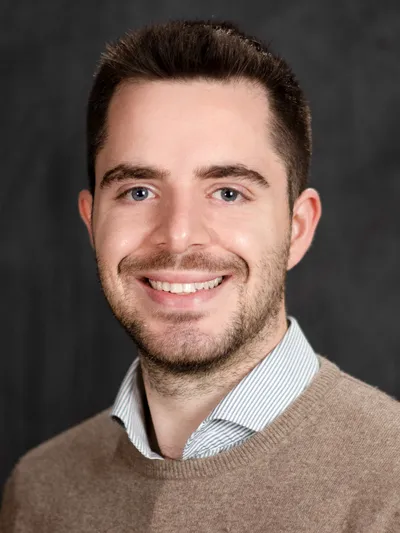
Luca Badolato is a fifth-year PhD candidate in the Department of Sociology. He previously earned a BS in Economics and Management from the University of Milan and an MS in Economic and Social Sciences from Bocconi University. Luca's research examines the drivers and consequences of population changes in both low-fertility contexts, particularly in the United States, and high-fertility contexts, particularly across sub-Saharan Africa. His work highlights how social status characteristics and broader social contexts shape inequalities in reproductive experiences across the life course.
Luca shared his answers with the Institute for Population Research (IPR) to the following questions about his career, research interests, and the impact of his work.
Q: Which of your current projects are you most excited about?
I am currently focusing on my dissertation, which examines childlessness across three research projects: (i) a demographic analysis of trends and patterns in childlessness across low-fertility countries; (ii) an analysis of motivations for and experiences of voluntary childlessness, drawing on data from the largest child-free online community on Reddit, r/childfree; and (iii) longitudinal qualitative interviews with young adults in the United States about their life plans, including family formation. I am particularly excited about the third project — talking with people always reminds me that, behind the statistics demographers focus on, there are the lives of real individuals, with their dreams, aspirations, anxieties, and concerns.
Q: How have you been connected to IPR during your time here at Ohio State? What drew you to IPR initially? How do you benefit from your involvement with IPR?
IPR was actually one of the reasons I applied to Ohio State, as I was looking for a graduate program that would provide strong training in demographic research. However, I did not expect to find such a supportive and friendly community. The coffees, lunches, seminars, and events at IPR (particularly the OSU-BGSU conference and the birthday cakes!) are the best part of my graduate journey, and I will always be grateful for the friends I met here. I hope to have helped foster a friendly community as well, serving three years as officers — treasurer, vice president, and president — of the IPR Graduate Student Organization.
Q: What has been the biggest impact of your work so far, or what do you hope for future impacts for your work?
My work builds on reproductive rights and justice frameworks to illuminate the barriers that prevent individuals from achieving their reproductive aspirations. For example, my research shows that realization uncertainty, situations in which individuals would like to have (more) children but are unsure they will be able to, is pervasive in the United States and varies by several social status characteristics. My research also shows that worries about the future, including concerns about financial or health conditions and broader worries about security, racism, climate change, and meeting increasingly high parenting standards, shape how young people think about family formation plans. Eventually, I imagine my work at the forefront of a counter-narrative that, rather than problematizing declining fertility rates, focuses on fostering societies in which everyone can thrive and achieve their aspirations.
Q: What motivates you to do what you do?
Declining fertility rates are becoming a central political concern worldwide, often amid anxiety and panic that blame young people for not having “enough” children rather than addressing deeper structural issues. These narratives are harmful: they harm young adults who want children but face unprecedented challenges; they harm those who, for whatever reasons, decide not to have children or to have smaller families; and they do little to support those who are figuring out their life paths. And young people are often left out of these debates. As a social demographer, I am motivated to contribute to these conversations by bringing solid data and careful analysis, acknowledging the real consequences of population change while recentering solutions on the needs, agency, and well-being of individuals.
Q: Have you ever been involved in any collaborative research? Tell us about some of the most productive collaborative relationships you’ve had or share some of the benefits you see to collaboration.
I enjoy working with others. I believe academic research should be a team effort, with everyone bringing their backgrounds, experiences, and interests. At IPR, I feel lucky to have had the chance to build a few collaborative relationships. I collaborate with my advisor, IPR Director Sarah Hayford, and Karen Guzzo (UNC) on several projects examining U.S. fertility trends. I also had the opportunity to work on Sarah Hayford’s NIH-funded project with Victor Agadjanian (UCLA) on family dynamics in rural Mozambique, alongside IPR affiliates Rin Reczek and Xueqian (Chelsea) Chen. I also led a collaborative project on fertility goals in Lagos, Nigeria, with (previous) IPR affiliates Anna Church, John Casterline, and Mobolaji Ibitoye, and with Funmilola OlaOlorun (University of Ibadan). The last five years have been so enriching and fun thanks to all of them!
Q: What are your career goals after you complete your doctorate?
After completing my PhD in May 2026, I will continue my academic career as a postdoctoral researcher in demography at the University of Oxford, and I am excited about this opportunity. I anticipate continuing my research on inequalities in reproductive experiences by adopting a more global perspective and harmonizing data sources across the Global North and South. I will miss IPR, but I will certainly stay connected!