Affiliate Spotlight: Harrison Yongjoon Youn
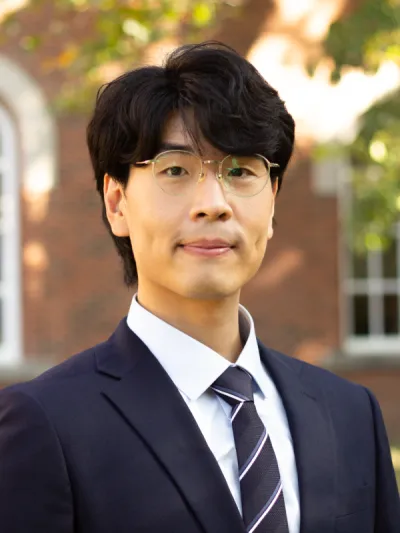
Harrison Yongjoon Youn is a fourth-year PhD student in the Department of Economics within the College of Arts and Sciences at The Ohio State University. His research examines how the labor market and the healthcare system interact, and how advances in AI shape human capital and labor market outcomes. In addition to being an Institute for Population Research affiliate, he is treasurer of the Institute for Population Research Graduate Student Organization (IPRGSO).
Q. Which of your current projects are you most excited about?
I am most excited about my project examining how changes in the value of employer-sponsored health insurance reshape incentives for both employers and employees, and how those shifts show up in labor market outcomes. At the same time, I am equally excited about my work on how AI affects labor market outcomes, especially for workers in entry-level positions.
Q. How have you been connected to IPR during your time here at OSU? What drew you to IPR initially? How do you benefit from your involvement with IPR?
I have always been drawn to sociology and population studies. Before coming to OSU, I worked on population aging, and that interest naturally carried into my economics research. Even as my core research focus has evolved over time, I have consistently been interested in household and worker behavior. IPR felt like a natural fit, so I became involved starting in my second year. I have really enjoyed my time with IPR, even just talking with affiliates about their research, and the welcoming and warm environment has been a real benefit.
Q. What has been the biggest impact of your work so far, or what do you hope for future impacts for your work?
I hope my research helps answer important questions in a meaningful way. In the U.S., health insurance and the labor market are tightly linked through employer-sponsored insurance, which covers nearly 60% of the under-65 population. Policy changes, such as subsidies for non-employment-based coverage, can shift the value of coverage both inside and outside employment, and that can affect workers’ job transition decisions and firms’ behavior at the same time. We still know relatively little about how changes in one market generate intended and unintended consequences in the other. My work aims to clarify those mechanisms and, importantly, who benefits and who may not benefit from these changes.
Q. What are your career goals after you complete your doctorate?
I hope to become a faculty member in academia.
Q. How did you come to your research area?
My research area was shaped mostly by reading widely across papers I found interesting, and letting those readings guide what I wanted to pursue.
Q. How does your personal or professional background shape the topics you are interested in or the way you do research?
Growing up, I provided long-term care for my grandparents for more than 10 years. That experience strongly shaped how I think about population aging and how functional decline affects decision-making. Those questions still influence the way I frame research problems, especially around working families and broader social issues.
Q. What motivates you to do what you do?
Curiosity and genuine interest. I am always excited to wake up and go to the office to work on questions I care about.
Q. What is the research finding you’re most proud of?
I will be able to answer this in about 2.5 years. :D
Q. Do you have a research finding that you’ve been most surprised by?
Yes. I have been surprised by how often theoretical assumptions fail when we test them empirically. That is a big reason I care so much about causal inference, to pin down what is actually true in the data. One example comes from work on employer-sponsored insurance and mobility. A common hypothesis is that workers who rely on employer-sponsored insurance should become more mobile when outside options become more affordable. What I find instead is that this incentive mechanism does not appear to drive mobility for most workers, and that underlying labor market structure, including sorting between firms and workers, plays a bigger role in why the prediction fails.
Q. Have you ever been involved in any collaborative research? Tell us about some of the most productive collaborative relationships you’ve had or share some of the benefits you see to collaboration.
I have multiple collaborations now, although not with IPR affiliates yet. In general, both small-team and larger-team collaborations help me see what I missed, push projects forward, and stay accountable through regular updates. I highly recommend it if you have the chance.
Q. Have you worked with, or thought about working with, policy makers or practitioners in your field to make changes based on your research? What was this experience like, and what changes (if any) came about because of your work?
In progress!
Q. Do you do any public-facing communication or dissemination of your work? How did you get started with this form of engagement? What have your experiences been? Why do you think it’s important for you? If not yet, do you plan on engaging in this type of communication in the future?
Not yet
Q. Have you done any community-engaged or participatory work? What was this experience like, and how did it shape your research goals or practices?
Not yet
Q. What kind of research would you like to be working on five years from now?
I would like to be working on research that is meaningful for the society we live in, and that still excites my interests.