Affiliate Spotlight: Taehyun Kim
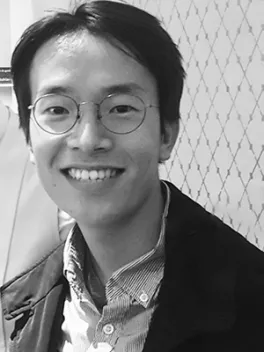
Taehyun Kim is a third-year PhD student in the Department of Sociology. His research focuses on the intersection of work, family, and social inequality, particularly how labor market institutions and social policies shape family behaviors and intergenerational outcomes. He has long been curious about how intergenerational family processes reproduce or mitigate social inequality. He received his dual-degree BSc in economics and business economics from Erasmus University Rotterdam in the Netherlands, and his MSc in economics from the Barcelona School of Economics.
Taehyun shared his answers with the Institute for Population Research (IPR) to the following questions about his career, research interests, and the impact of his work.
Q. Which of your current projects are you most excited about?
I am particularly excited about my project on how changes in labor institutions impact family behaviors, including parents’ time use, the division of labor within families, and children's human capital development in the long term.
Q. How have you been connected to IPR during your time here at Ohio State? What drew you to IPR initially? How do you benefit from your involvement with IPR?
I first got involved with IPR through its weekly seminars in my first year at Ohio State. The seminars have provided great opportunities to meet and learn from scholars across disciplines. I especially appreciate IPR’s intentional efforts to build an inclusive intellectual community for graduate students, offering opportunities to engage with visiting scholars and, importantly, financial support for presenting at the Population Association of America annual conferences. I have also been fortunate to serve as vice president and president of the IPR Graduate Student Organization, which allowed me to contribute to and help build a graduate student community.
Q. What has been the biggest impact of your work so far, or what do you hope for future impacts for your work? (This could be research impact, impact on policy or practice, administrative impact, etc.)
I’m still in the training stage and haven’t been in a position to make a “big” impact on policy or my research area. For now, I try to contribute to the academic community in rather modest ways by publishing papers, presenting my work at academic conferences, and also sometimes serving as a reviewer or chair for conferences. In the long run, I hope my research can advance academic knowledge and provide rigorous evidence to inform equitable and effective social policies.
Q. What are your career goals after you complete your doctorate?
After finishing my PhD, I want to pursue a faculty position at an academic/research institution.
Q. How did you come to your research area?
Growing up in South Korea, I experienced and observed how patriarchal norms and gendered expectations shape various family behaviors, from early childhood to labor market activity. South Korea is also an intriguing setting for researchers, as it went through rapid economic growth and social change. Many of my research questions naturally grew out of these observations. I am interested in how family processes work in traditionally gendered societies where the breadwinning men and caregiving women norm persists.
Q. How does your personal or professional background shape the topics you are interested in or the way you do research?
I was born and raised in South Korea, and during my childhood, I moved to several different cities because of my mother’s work. I later lived in the Netherlands for my undergraduate dual degree program, worked as a field researcher in Malawi, and completed my master’s in Barcelona, Spain. Living in these different environments made me more aware of how social institutions and contexts shape the opportunities and structural constraints individuals and families face.
Q. What motivates you to do what you do?
I am largely motivated by the belief that academic findings can improve people’s lives by providing evidence and grounds for policymaking. This belief drives my graduate training, and I hope my research can reach beyond the ivory tower and contribute to real-world social challenges.