Affiliate Spotlight: Sandy Wong
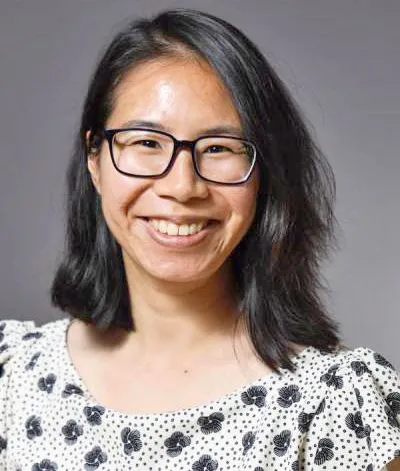
Dr. Sandy Wong is an assistant professor in the Department of Geography within the College of Arts and Sciences. As a health geographer, she broadly studies how our social, built, and natural environments influence the well-being of marginalized communities in the United States. She is currently collaborating on projects that focus on environmental justice among disabled and queer people, health outcomes and care conditions within nursing homes, and inequalities in healthcare access.
Professor Wong shared her answers with the Institute for Population Research (IPR) to the following questions about her career, research interests, and the impact of her work.
Q. How long have you been at Ohio State, and how long have you been connected to the Institute for Population Research?
I started my position in fall 2023 and got connected to IPR early on that same semester, so it has been about 2.5 years.
Q. Which of your current projects are you most excited about?
I am keen to extend my ongoing work in environmental ableism, sexism, and heterosexism to better understand the perceptions and lived extreme weather and environment experiences of disabled and queer individuals. I am the PI on one project titled, “Geographic Disparities in Climate Change Vulnerabilities at the Intersection of Disability, Race, and Class,” that is funded by an IPR seed grant. In the coming years, I plan to develop more community engaged projects to better generate new understandings and insights on people’s vulnerability and resilience against environmental hazards, and to develop findings and policy recommendations to be included in climate mitigation and adaptation plans.
Q. What drew you to IPR, and how do you benefit from your involvement with IPR?
As a multidisciplinary center that supports population and health research, IPR most closely aligns with my work. IPR has funded my collaborative research with a seed grant, invited me to give a public presentation to share my research with others, and organizes a seminar series that offers opportunities for me to learn from and connect with amazing scholars.
Q. What has been the biggest impact of your work, or what do you hope for future impacts for your work?
As far as I am aware, the biggest impact of my work has been on research and teaching. My scholarship has been cited by international researchers investigating issues specific to people with disabilities on topics related to transportation, travel experiences, assistive technology, mobile app development, recreation/sport accessibility, and the built environment. When I teach about disability and environmental ableism in my classes, I always have students who are learning this information for the first time and who are inspired to think through how our environments can be more accessible and inclusive. I am hoping that the future impacts of my work expand to have effects on practice and policy.
Q. What kinds of collaborative research have you been involved in? Tell us about some of the most productive collaborative relationships you’ve had, or share some of the benefits you see to collaboration.
Two major projects that I co-lead are in collaboration with other IPR affiliates. One is with IPR affiliate Dr. Huyen Le on the project I mentioned earlier, “Geographic Disparities in Climate Change Vulnerabilities at the Intersection of Disability, Race, and Class,” that is funded by an IPR seed grant. Another project is with IPR affiliates Dr. Kelsea Best and Dr. Smitha Rao on, “Assessing and Enhancing Climate Resilience of LGBTQIA+ Populations in Ohio,” that has been funded by grants from the Sustainability Institute and Kirwan Institute. Across both projects, we are supervising and collaborating with driven graduate research assistants — Ruochen Yin, Brandon Rothrock, and Cyenna Ulrich-Cech — who are all working on first author manuscripts to submit to peer-reviewed journals and attending conferences to share our findings with others.