Affiliate Spotlight: Jin Jun
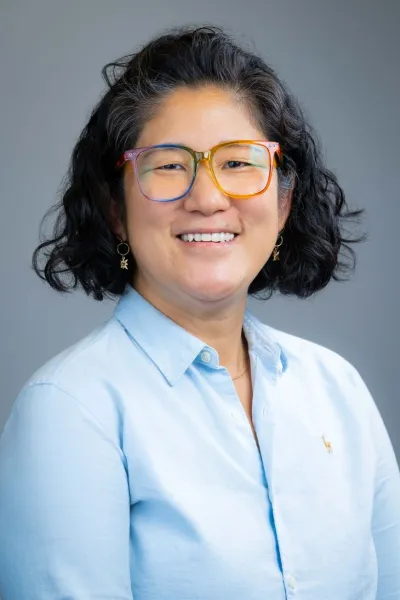
Dr. Jin Jun is an assistant professor in the Center for Healthy Aging, Self-Management and Complex Care at the College of Nursing. Her research focuses on how employment affects health and well-being of individuals and their families. She looks at the connection between work, wages, and access to resources like health insurance, factors which shape health equity.
Q. Which of your current projects are you most excited about?
I am excited about every project I am involved in, but the ones I am most excited about are the Support in Healthcare: Investigating Nursing assistants NEeds (SHINNE) Study and Positive Approaches to THriving through Occupational Mobility (PATH) Study. The SHINNE study examines various social drivers of health among nursing assistants and the PATH Study explores the lived experiences of older, Black women, nurse C-suits leaders who began their careers in low-wage direct care positions and have successfully navigated significant career transitions.
Q. What drew you to IPR, and how do you benefit from your involvement with IPR?
I was drawn to IPR because of its strong focus on multidisciplinary research and its role in bridging behavioral and biomedical sciences, which is perfectly aligned with my work on how employment shapes health and well-being. IPR provides invaluable benefits through collaboration opportunities, seed funding, data support, and mentoring, all of which strengthen my research and help advance equity and occupational justice.
Q. What has been the biggest impact of your work, or what do you hope for future impacts for your work?
The biggest impact of my work and what I hope to achieve is advancing occupational justice by highlighting how work functions as both structural and social driver of health and influences individual’s and their families’ health and well-being. I aim to influence policies and practices that create equitable, supportive work environments where individuals and families can thrive. Ultimately, I hope my research empowers workers and provides evidence that could lead to systemic changes reducing inequities linked to labor and employment.
Q. How did you come to this career and to your research area? How does your personal or professional background shape the topics you are interested in or the way you do research? What motivates you to do what you do?
Many of us work. And we spend nearly a third of our lives at workplaces, making the workplace and what we do for a living (paid employment) one of the most important contributors to our health and well-being. Our jobs are tied to not only wages but also tangible and intangible benefits, resources, and social capital and networks.
Growing up as a first generation immigrant in North Philadelphia, I often saw people working many hours without being able to leave their situation. As I got older, I saw that this notion of occupational upward mobility (either in pay or prestige) being possible through hard work and educational attainment was not necessarily true for many. There were persistent individual and systemic barriers, such as low wages, limited access to financial and social resources, and structural inequities, determining who gets to advance and who is left behind. This perspective drives me to center workers’ voices in their health and well-being.
Q. Have you worked with policy makers or practitioners in your field to make changes based on your research? What was this experience like, and what changes (if any) came about because of your work?
Yes, I have worked with policymakers to translate research into actionable insights. Through the Research-to-Policy Collaboration at Penn State University, I participated in a policy brief writing workshop and authored a brief on nursing assistants’ and aids’ wages and working conditions. This brief was shared with representatives in all 50 states. I also engaged with several city councils in Philadelphia to discuss challenges faced by assistants and aides in group homes and other care facilities.
While these efforts did not lead to immediate policy changes, they opened important conversations and helped raise awareness among decision-makers about systemic issues affecting frontline healthcare workers. From this experience, I learned how critical it is to translate research into clear, actionable language for policymakers. Writing the policy brief taught me how to distill complex issues into concise recommendations that resonate with decision-makers.
I also realized that policy change is often incremental, starting from raising awareness. And starting conversations can be just as important as immediate outcomes. Finally, I gained insight into the value of building relationships and persistence in advocacy, as systemic change requires sustained engagement over time.