Affiliate Spotlight: James Lachaud
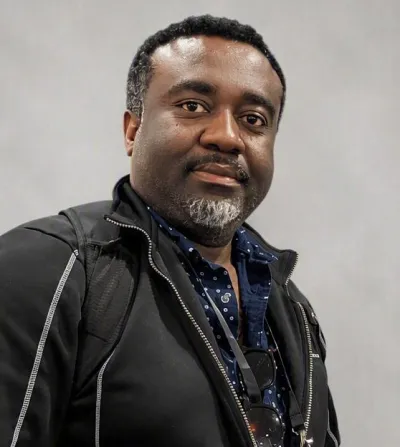
Dr. James Lachaud is an assistant professor in the College of Social Work at the Ohio State University. He studies how structural conditions, like housing instability, homelessness, and social exclusion can shape health, healthcare access, and premature mortality. He works with community and policy partners to translate evidence into action.
Dr. Lachaud shared his answers with the Institute for Population Research (IPR) to the following questions about his career, research interests, and the impact of his work.
Q. Describe your main research interests in a few sentences.
My research delves into housing as a fundamental determinant of health. I explore how housing instability and homelessness become biologically and socially "embedded" throughout the life course, influencing mental health, chronic disease, health care continuity, and premature mortality, particularly among individuals facing multiple intersecting vulnerabilities. Methodologically, I employ rigorous causal and quasi-experimental approaches, including randomized trials, linked administrative data, and longitudinal modeling. I complement these with mixed-method and community-engaged strategies to ensure that the findings are both scientifically robust and practically applicable.
Q. Which of your current projects are you most excited about?
Three projects are especially energizing right now:
- Housing interventions and mortality: I am gathering evidence on whether housing and support interventions can reduce premature mortality among adults with experiences of homelessness and serious mental illness, and for whom these interventions are most effective, by using trial data linked to health and vital statistics.
- Social isolation and loneliness as policy-relevant determinants: I am enhancing measurement and intervention strategies for addressing social isolation and loneliness among individuals with lived experiences of homelessness, an issue frequently observed by practitioners but still insufficiently addressed in policy design.
- Cardiometabolic risk and basic goods insecurity in Haiti: Collaborating with Haitian partners, I contribute to nationally representative research on hypertension, diet, and food insecurity, aiming to generate actionable evidence for prevention, health system planning, and equitable policy responses, while also strengthening research capacity through collaborative mentorship.
Q. What drew you to IPR, and how do you benefit from your involvement with IPR?
IPR captivated me because it is tailored to the type of research I conduct: population-focused, method-forward, and policy-relevant. I gain four concrete benefits from IPR.
- Intellectual community: IPR seminars offer a platform where researchers in housing, health, demography, and policy exchange insights, often igniting new questions and collaborations.
- Methods and data capacity: IPR’s focus on robust measurement, rigorous inference, and data access aligns perfectly with my work involving administrative linkages, longitudinal cohorts, and multi-site trial data.
- Collaboration and mentorship: IPR facilitates finding collaborators across colleges and connecting with graduate students whose interests and skills complement my projects.
- Translation and visibility: IPR enhances communication and dissemination, helping research extend beyond journals to reach decision-makers, community partners, and the public.
Q. What has been the biggest impact of your work, or what do you hope for future impacts for your work?
The impact I value most is when rigorous evidence improves how systems respond to people who are often excluded from healthcare and policy attention. My work on Housing First and supportive housing has helped clarify what housing interventions do well (such as improving housing stability and aspects of service access), where outcomes are more complex (such as long-term mortality and chronic disease trajectories), and what complementary supports may be needed to reduce preventable illness and death. Looking forward, I hope my work contributes to: (1) better design and targeting of housing + health interventions; (2) stronger local and state policy tools to prevent homelessness and reduce health inequities; (3) practical analytic tools, like evaluation and forecasting workflows, that community partners can actually use; and (4) a research-to-practice pipeline that trains students in rigorous, ethically grounded, community-engaged population research.
Q. How did you come to this career and to your research area?
I came to population research through a combination of formal training and lived experience. My early pathway in applied economics and demography and my work across Haiti, Burkina Faso, and the Americas made it impossible to ignore how structural conditions, poverty, housing instability, and weak safety nets translate into health outcomes over time. During doctoral and postdoctoral training, I became increasingly drawn to questions that sit between disciplines: not only “what is the distribution of risk,” but “which policies and systems can change that distribution.” Homelessness and housing policy became a natural focus because they are powerful, measurable social determinants, and because communities urgently need evidence that can guide practical solutions.
Q. How does your personal or professional background shape the topics you are interested in or the way you do research?
My background is cross-context and multilingual, which shapes both the questions I ask and how I try to answer them. Having lived and worked in settings with very different policy infrastructures, I am especially attentive to how “context” is not a nuisance variable; it is often the mechanism of the policy. Professionally, working closely with service systems reinforced that people’s outcomes are shaped by more than individual behavior; they are shaped by the conditions and constraints surrounding them. This perspective pushes me toward research that is both rigorous and grounded: strong causal designs when possible, mixed-method triangulation when needed, and collaboration with people who know the system from the inside — clinicians, case managers, housing providers, and, importantly, people with lived experiences.
Q. What motivates you to do what you do?
I am motivated by the gap between what evidence suggests is possible and what people actually experience in their daily lives. In many policy conversations, housing and health are treated as separate sectors; in real life, they are inseparable. My work is driven by a simple goal: to generate trustworthy evidence that helps communities and decision-makers reduce avoidable suffering, especially preventable illness and premature death, by improving the conditions that shape risk in the first place.
Q. What is the research finding you’re most proud of?
I am proud of work that uses rigorous designs to answer questions that matter directly to policy and practice, particularly long-term evaluations of Housing First and supportive housing interventions. These studies help move the field beyond short-term outcomes and toward a life-course perspective: understanding trajectories of health care continuity, community integration, and serious outcomes that systems care about, including avoidable hospitalization and mortality risk. I am especially proud when findings are taken up in planning discussions with practitioners or contribute to a more honest, evidence-based conversation about how to design supports that match people’s needs over time.
Q. What is the research finding you’ve been most surprised by?
One of the most sobering surprises has been how difficult it can be to shift some of the most downstream outcomes, such as mortality, through housing interventions alone, even when housing stability improves. This pattern is a powerful reminder that homelessness is not only a housing problem, it is also a health system and structural policy problem. It has pushed me to focus more on integration: how housing, primary care continuity, mental health care, income support, and social connection need to be designed as a coordinated response, rather than separate programs operating in parallel.
Q. What kinds of collaborative research have you been involved in? Tell us about some of the most productive collaborative relationships you’ve had, or share some of the benefits you see to collaboration.
Collaboration is central to my work because the questions I study lie at the boundaries of sectors and disciplines. Much of my research has been team science, working with clinicians, social workers, epidemiologists, economists, statisticians, and community partners on multi-site trials, longitudinal cohorts, and mixed-method evaluations. The most productive collaborations are those where partners bring different forms of expertise: lived experience and service knowledge, clinical insight, policy context, and analytic rigor. When those perspectives are aligned early, especially around a shared theory of change and decision context, collaboration produces research that is both stronger and more actionable. At Ohio State, IPR is one of my primary platforms for building these collaborations. It helps connect population researchers across colleges, making it easier to form teams that can move from ideas to funded projects and high-impact dissemination.
Q. What kinds of service to the field are you involved in? How does this service work fit into your professional goals/trajectory?
I perceive service as an integral component of cultivating a research ecosystem that enables high-quality, policy-relevant scholarship. My contributions include journal peer reviews, research mentorship, and active participation in professional networks centered on homelessness, housing policy, and population health. I also prioritize service that enhances equity and methodological rigor, such as advocating for evidence synthesis and evaluation practices that are transparent, replicable, and applicable to real-world contexts. This service aligns with my professional path: to establish a sustainable research program that earns the trust of communities and decision-makers, and to mentor students and junior scholars committed to conducting rigorous population research with tangible impact.
Q. Have you worked with policymakers or practitioners in your field to make changes based on your research? What was this experience like, and what changes (if any) came about because of your work?
Indeed, a significant portion of my work has been carried out in direct collaboration with service providers and policy stakeholders, often through commissioned analyses, program evaluations, and joint studies addressing urgent operational questions. In practice, this involves co-defining outcomes, aligning analytical choices with the decisions partners need to make, and translating results into actionable recommendations. These partnerships have led to tangible improvements, such as clearer program monitoring frameworks, enhanced evaluation and learning processes, and more targeted support strategies within housing programs. They have also taught me that policy impact is rarely a singular event; it is cultivated through relationships, credibility, and iterative learning with partners who are accountable for real-world outcomes.
Q. Do you do any public-facing communication or dissemination of your work? How did you get started with this form of engagement? What have your experiences been? Why do you think it’s important for you?
I do. I consider public-facing dissemination a responsibility, especially for research that is publicly funded and tackles pressing social issues. I share the findings through practitioner-oriented reports and briefs, stakeholder meetings, community presentations, and accessible summaries. I began this practice because community and service partners requested it, and I realized that even robust evidence can fail to effect change if not communicated in formats and language that decision-makers can utilize. For me, the goal is translation with integrity: making results understandable and actionable without oversimplifying their nuance. When dissemination is executed well, it enhances accountability, enriches policy debates, and fosters trust between universities and communities.
Q. Have you done any community-engaged or participatory work? What was this experience like, and how did it shape your research goals or practices?
Indeed, community engagement has been a cornerstone of my approach, especially in addressing homelessness and global health issues. Whether employing participatory rapid appraisal methods, conducting qualitative follow-ups with program participants, or co-designing evaluations with housing and health providers, community engagement ensures that research remains grounded in real-world experiences. These experiences have influenced my work in two significant ways. Firstly, they have reinforced my dedication to mixed-method designs that value both quantitative data and qualitative narratives. Secondly, they have driven me to focus on research questions that are not only actionable but also useful for communities and systems in making immediate decisions, while still contributing to the development of long-term theories and methods.
I would like to highlight a few recent publications that represent the core of my agenda:
- Housing and Support Intervention and Mortality Among Homeless Adults With Mental Illnesses (JAMA Network Open, 2025).
- Social isolation and loneliness among people living with experience of homelessness: a scoping review (BMC Public Health, 2024).
- Continuity of primary care among homeless adults with mental illness who received a housing and mental health intervention (Family Practice, 2023).
Together, these publications signal my focus on housing as health policy, rigorous evaluation and causal inference, and producing evidence that can inform both service systems and broader policy designs.